Dear Everyone,
I would like to continue from where I left off last week on “The Future of PEACE LEADERSHIP” Symposium hosted by the RC of Melbourne, and the Panel Discussion on “How do we reverse the Doomsday Clock?”, given that it is 100 seconds to midnight. The panel comprised:
PRIP Ian Riseley OAM, Prof. the Hon. Gareth Evans AC, former politician & academic, Steve Killelea AM, Founder, Institute for Economics and Peace (IEP)and Dr. Emma Leslie AM, Executive Director, Centre for Peace and Conflict Studies.
The Covid Pandemic was a wake-up call, and Gareth advocated a cooperative, collaborative, multi-national approach to work out solutions to 3 problems he identified:
- Pzndemics
- Climate Change
- Nuclear Weapons
China and the U.S. have already decided on a cooperative approach to climate change.
Steve advocated getting better mechanisms for communication. Regarding nuclear disarmament, Russia and the U.S. have sophisticated protocols in place to avoid nuclear war. But the things underpinning Western democracies are declining.
Gareth pointed out that there are 14,000 warheads in existence and 130 countries have agreed to the Nuclear Ban Treaty. The inadvertent use of nuclear weapons due to human error, and the gap between the dream of nuclear risk reduction and the reality concern him. Steve thought a “top down” approach using senior decision-makers would be required unless every nation of the world was functioning. Gareth thought that bottom-up pressure from the people and peer-group pressure were absolutely crucial, i.e. the U.S. allies and partners must make it clear to the U.S. that they believe in nuclear disarmament and the “No First Use” doctrine of Obama. For Kim Jong Un to be homicidal would be suicidal, and Trump was right to engage with him.
Steve believes that technology will enable us to avoid dangerous climate change through innovation. Solar power is a cheaper form of electricity than coal. Battery technology will eventuate, and the cost of computers is halving every year. There is the potential for conflict with climate change however.
Ian also endorsed the bottom-up approach, saying it was almost fashionable to believe in the environment, and that there were lots of reasons to be optimistic; with the advent of batteries (for storage), there would be no more gas-fired power stations.
Gareth noted that the Chinese population is unhappy about the pollution they experience daily and are pressuring the Chinese government.
Emma said that North Korea has only 30% of arable land where they can grow their own food. This led to a discussion on refugees and foreign aid. Emma said we should be more generous in bringing in refugees, and the reason we have Tamil refugees is that Sri Lanka is still persecuting Tamils.
Good international citizenship is about being, and being seen to be a good international citizen. This behaviour also comes under the category of self-interest. It is the right thing for a country to do morally but hardheadedness is also a consideration. Some panellists thought that Australia had a reputation for decency and did not just look at the bottom line.
Steve thought that the overseas developmental aid that the U.S. cut back may not rebound. He said that the horn of Africa, southern Africa and Central Asia from Syria to Pakistan had the least peaceful countries in the world. Since 2014, the population has been increasing, so more food will need to be produced. How this can be tackled is through overseas developmental aid, intervention in crises, birth control and if water can be monetised.
Gareth added that we need the rich countries to be generous; Australia’s foreign aid is the lowest it has ever been. “We have the resources and should be prepared to spend them.” Emma then commented that we are still that white nation in the midst of Asia, and that the Australia – China relationship needs attention. Ian stressed the need for more women leaders as they adopt a calmer and more rational approach.
Gareth said that we must keep our economic relationship alive with China, but also sophisticated diplomacy is needed unlike what our government is doing today. We need to find the balance between sycophancy and hostility.
The United Nations was then in the spotlight. Observations made were that it needs ongoing reform and a massive injection of funds. A Club of States no longer serves the purpose of what we need to get done in the world. The Security Council is not sending people to save the people of Myanmar. Rotary can have extraordinary influence in the world through its volunteering and values. “Mass atrocity crimes are everyone’s business.” We have to work around the UN’s structures and need to take seriously our responsibility to protect young voices and lives in Myanmar. The WHO, UNHCR and the WTO are critical parts of the international community; organisations like Rotary, the IEP, NGOs, civil society and individuals all have roles to play to make a more peaceful world. Steve said that although the UN is inefficient, we need it, and that business, civil society and educators and not just States need to get involved.
Emma said to listen more deeply to young people, citing Malala and Greta, who understand the key issues better than the rest of us, and to trust them to lead us forward. Ian agreed that we need to collaborate more with young people and Rotary works with young people because they are the future of the world.
In summary at the end of the discussion the panellists made these points:
- The world has learnt something over the last 100 years. Conflict isn’t in the national interest.
- We have to be optimists, as this is self-reinforcing
- Be a good international citizen and be more generous with our aid
- Develop women and young people as leaders
- Rotary could have a crucial advocacy role
- The 6 qualities leaders need to have for peacebuilding – see last Sparkle
- Rotary’s global presence is real and effective
- We must build peace because it’s the right thing to do – Ravi Ravindran
Chair, Rotary Foundation (2020-2021),Past RI President (2015-2016), Rotary Club of Colombo
Thank you to the Rotary Club of Melbourne for the symposium which focused on giving participants a broader understanding of the most important issues facing the global community, and how Rotary can be a vital player in finding solutions.
Thank you’s this week to:
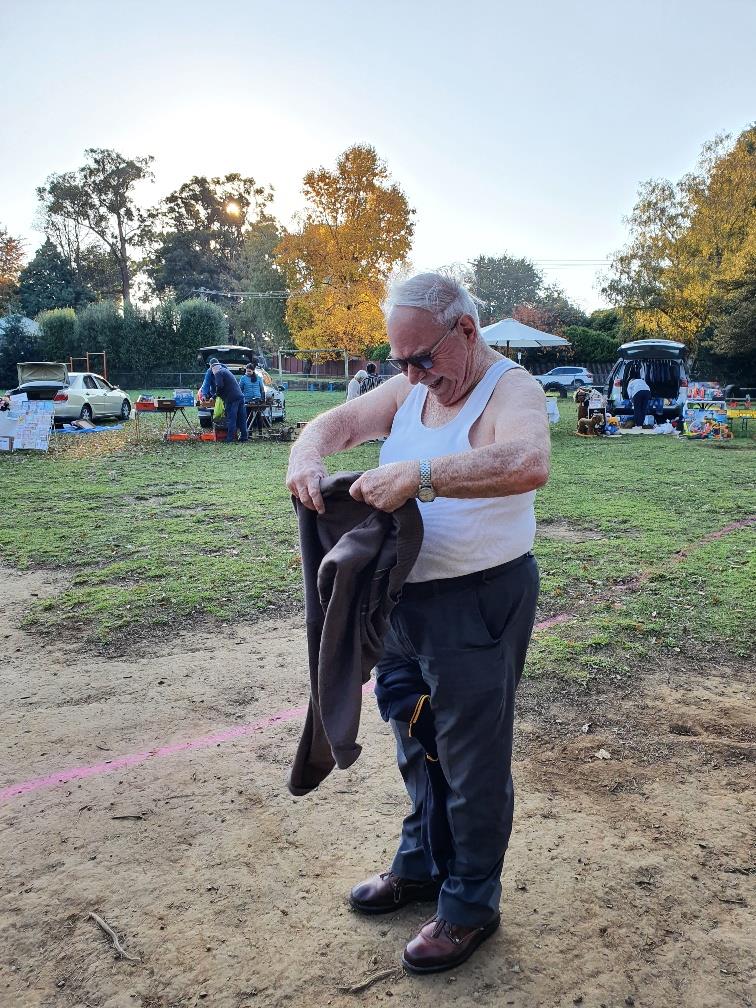
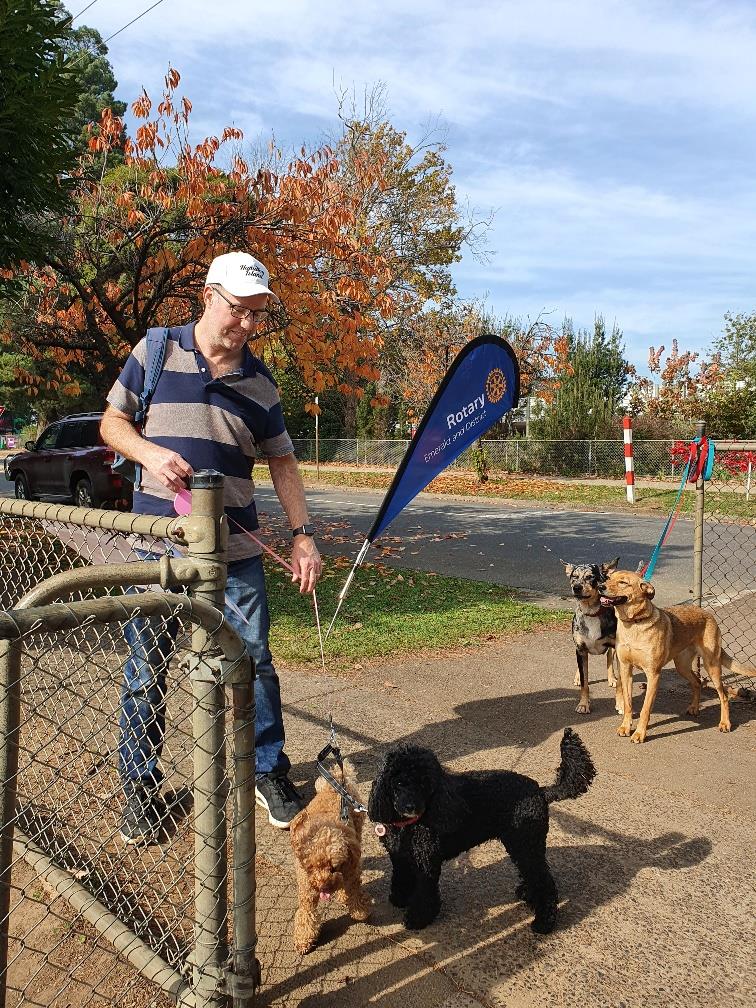
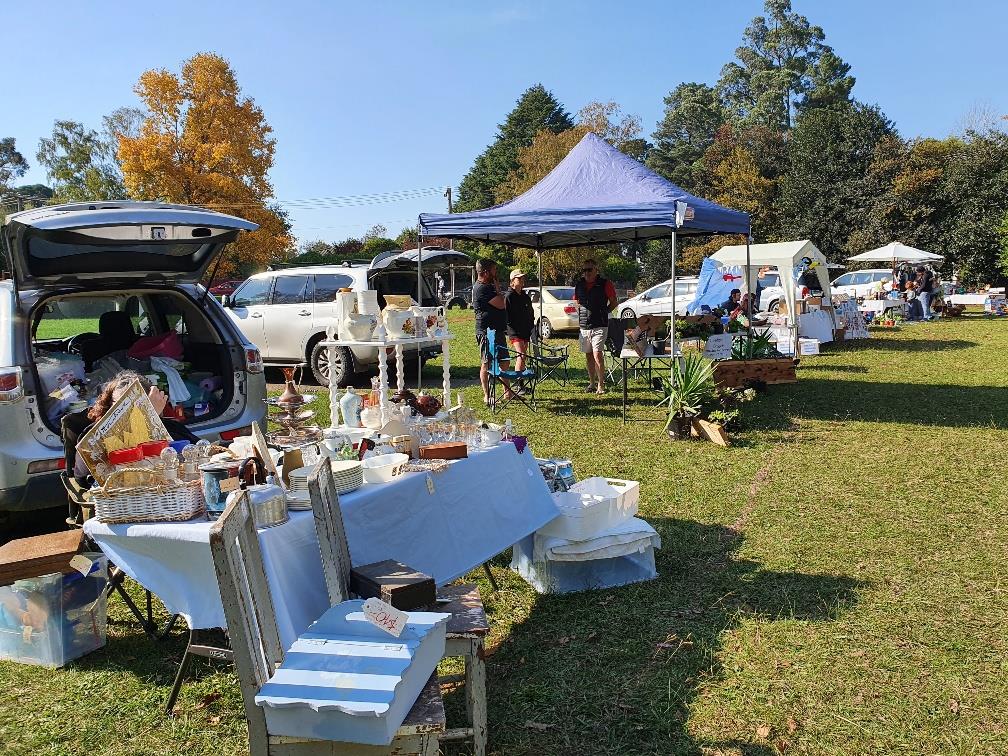
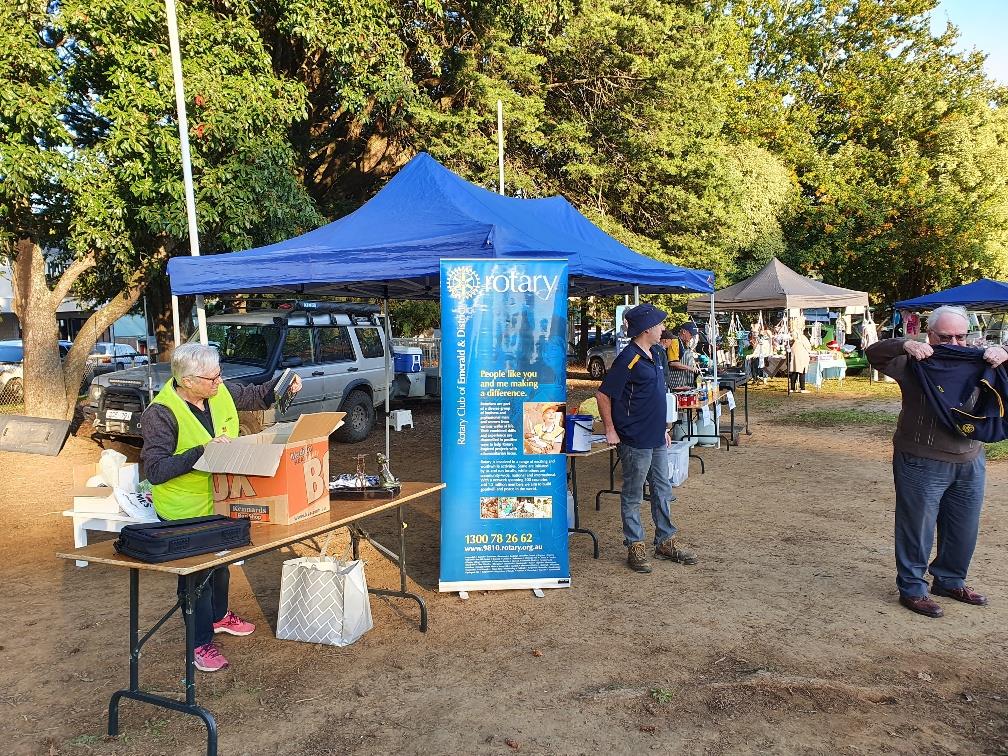
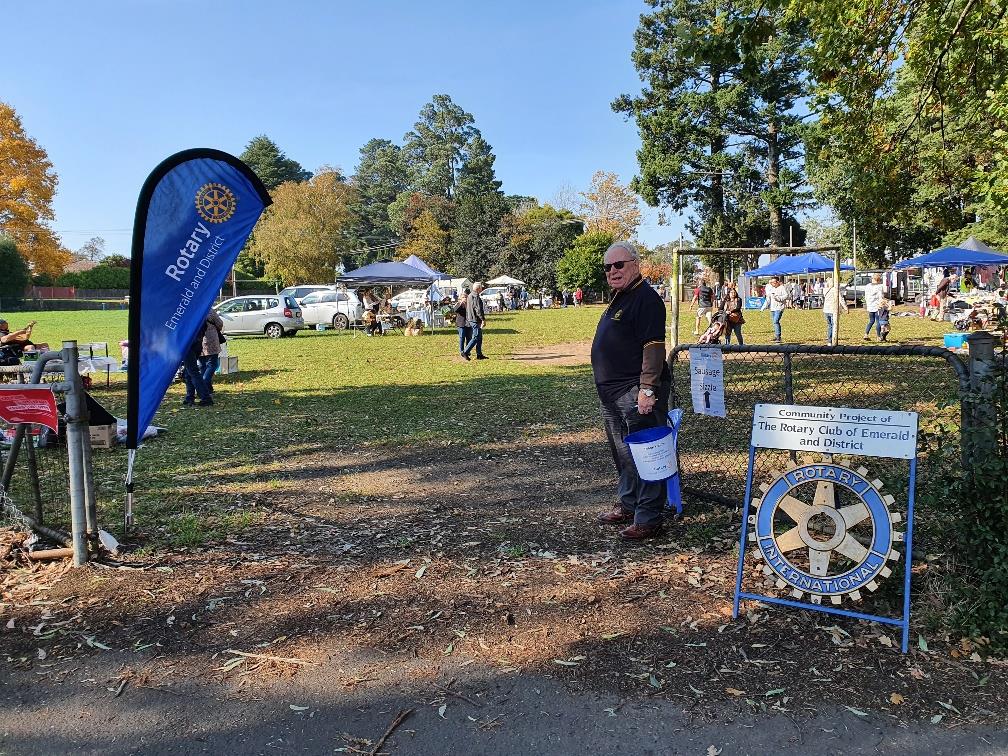
- Catherine and Emma and the T2T Market C’tee for all their work for the 1st of May Market.
- Kelly for drawing up a Spreadsheet for catering for future markets.
- who has added their names to the roster Emma has sent out for the May Market. We can’t do it without you. Don’t forget your bread tags to give to market stallholder Tam on Saturday.
- Gloria for telling us about RAM’s efforts to combat malaria in Vanuatu and Malaria Awareness Day 30th April.
- Tina who secured Emerald Secondary College’s commitment to our Cluster’s Youth Wellbeing Project.
- Tina and the 5 members who will be assisting the delivery of RYDA – Rotary Youth Driver Awareness – to ESC students next Tuesday.
- Roy and Russ Nielsen for negotiating with Cardinia Council for our All-American Car Display and Man-Cave Alley next February.
-
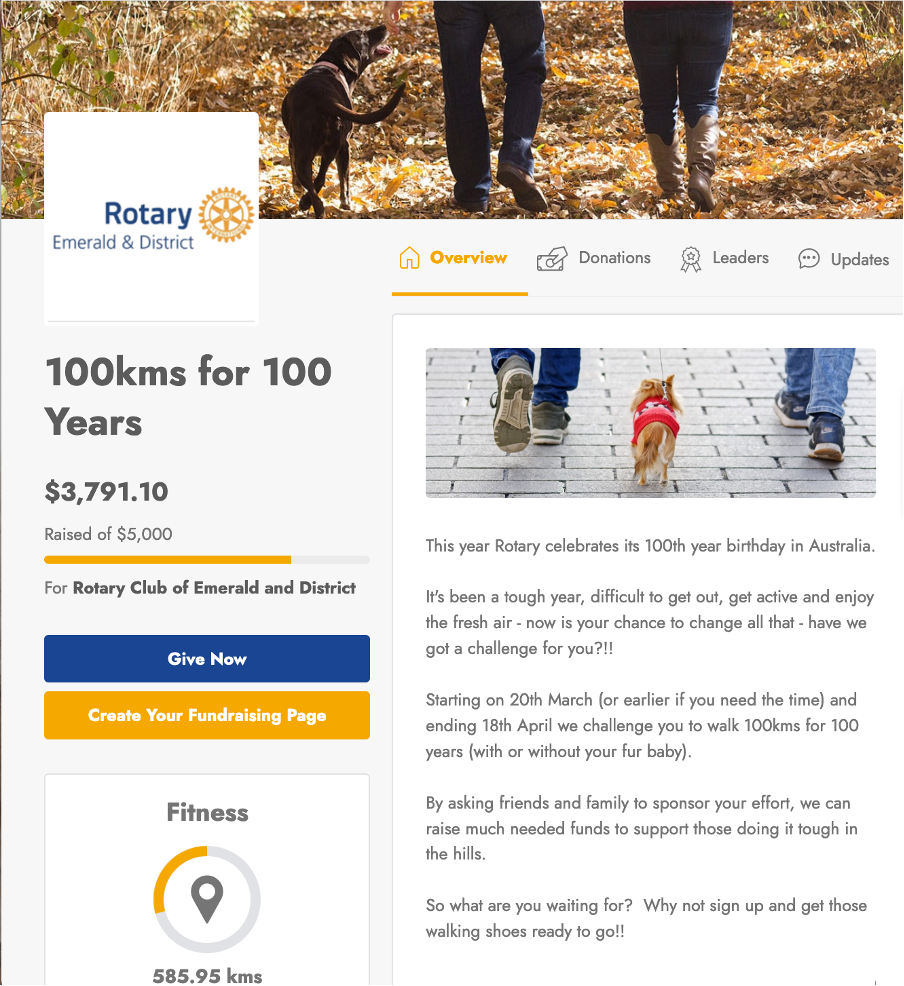
- The R100 Walkers for raising a fabulous amount of money for Acct. No.2 by walking 100 kilometres.
- Kris for beginning work on this year’s Annual Report.
**This Tuesday night on the 4th of May, our guest speaker is Barry Ryder businessman, marathon runner, prison fellowship and drug rehabilitation worker.
**Next week: on the 11th of May is to be decided, but a KYR at least.
**The following week: on the 18th of May, the gorgeous Sue Gregory will be a guest to receive our donation to the Australian-Himalayan Foundation.
Come and join us at The Paradise for a great night!
OR hopefully you can Zoom in.
Stay safe and stay Rotary Even Prouder.
Yours in Rotary,
Vicki.